|
|
Ellis Island
The portal to America for 12 million immigrants from 1892 to 1924
This Ellis Island FAQ answers frequently asked questions about Ellis Island and immigration history.
History of Ellis Island
-
Why and when did Ellis Island become an immigration center?
SHOW ANSWER
During the 1800's, political, religious and economic unrest in Europe sparked a great migration across the Atlantic and into the United States. One of the busiest ports of call was New York Harbor and it soon became apparent that Castle Garden, the state-run immigration facility for New York, could not handle this growing annual wave. The federal government stepped in and constructed a new federally-operated immigration station on Ellis Island, which opened on January 1, 1892.
-
Where were immigrants processed before?
SHOW ANSWER
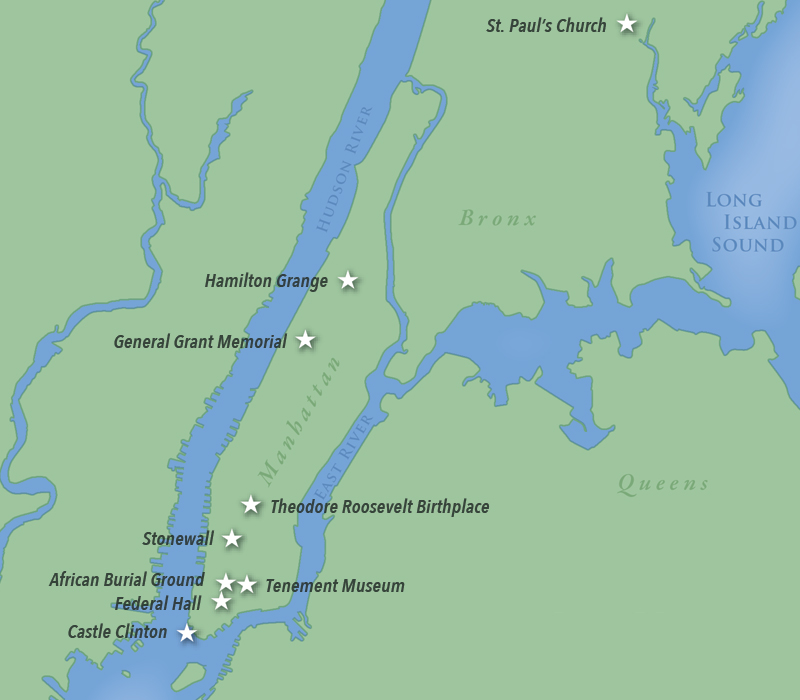
Prior to 1890, states regulated immigration into the United States. Castle Garden in the Battery (originally Castle Clinton) served as the immigration station for the State of New York -- from 1855 to 1890 -- serving approximately eight million immigrants before closing.
-
Where have immigrants been processed since?
SHOW ANSWER
After World War I, the United States began establishing embassies all over the world and the processing of immigrants occurred in their home countries instead of Ellis Island, which was eventually phased out of use.
-
How many immigrants came through Ellis Island overall?
SHOW ANSWER
Over 12 million people were processed at the immigration station.
-
Who are some of the famous immigrants that came through Ellis Island?
SHOW ANSWER
Some famous immigrants to come through Ellis Island are Actor Charles Chaplin, director Frank Capra, the Trapp Family (inspirers of The Sound of Music), actor Cary Grant and former New York City Mayor Abraham Beame.
The Immigrant Experience
-
What was the voyage to Ellis Island like?
SHOW ANSWER
Passengers in first and second class often had rooms to themselves, with beds, fresh water and bathroom facilities. They had access to the best food onboard and to the upper deck of the ships. Meanwhile, steerage or third class passengers traveled in crowded and often unsanitary conditions near the bottom of steamships with few amenities. They often spent weeks seasick in their bunks during rough Atlantic Ocean crossings. Their only respite -- and only when the weather was calm -- was the steerage deck, which offered fresh air.
-
How long was the trip?
SHOW ANSWER
The average ocean voyage for immigrants took between 7 and 21 days.
-
How were immigrants processed?
SHOW ANSWER
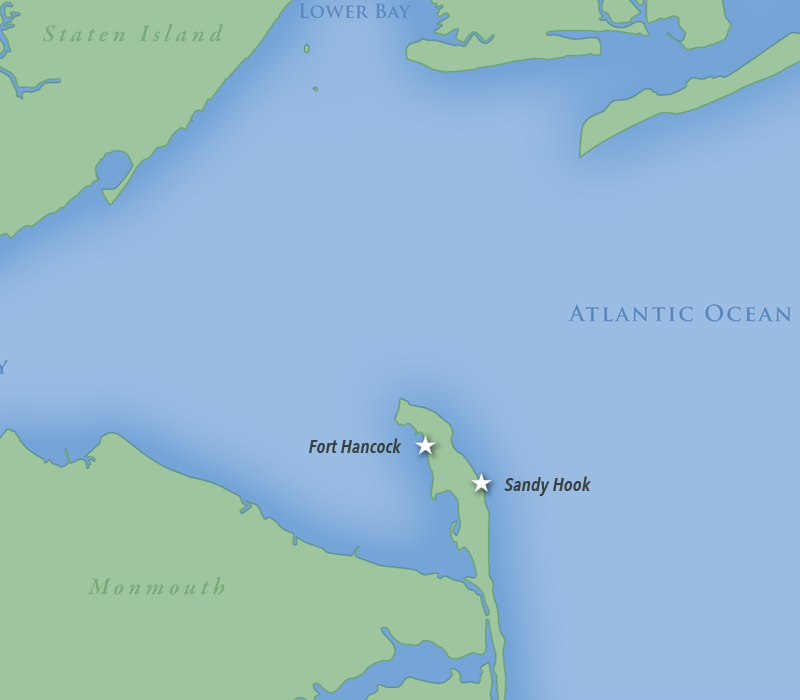
The inspection and processing began even before immigrants got to Ellis Island. On entering the Lower Bay of New York Harbor, the ships would drop anchor and wait sometimes days for government doctors to board and check for instances of contagious disease. Those suspected of disease would be transferred to quarantined hospitals for treatment. First and second class passengers were exempted from rigorous exams unlike their steerage class shipmates. The ships would then proceed to Manhattan where first and second class passengers could disembark and enter the United States. Steerage class passengers however, were then loaded on barges with their possessions to Ellis Island.
On Ellis Island, immigrants were directed to steep staircases that led to the Registry Room. Doctors looked on, tagging the clothes of those who seemed ill or infirm with letters written in chalk so that doctors performing the more formal inspections would take note -- (L) for lameness, (X) for suspected mental illness, (E) for eye problems and so on.
In the Registry Room, hundreds waited for their names to be called and for formal medical, mental and legal examinations. All were invasive but none more so than the medical inspection, which required men and women to submit to personal and in most cases embarrassing examinations by strangers. The mental and legal inspections included simple puzzles and questions about an immigrant's criminal history, support of questionable organizations, literacy, whether they had jobs waiting in America and how much money they had on their person. Immigrants who survived and passed this gauntlet were deemed suitable for entry into the country.
Visiting Ellis Island
-
What can I see and do on Ellis Island?
SHOW ANSWER
Visitors can wander through the main building and see permanent and visiting exhibitions on the history of the island and relevant topics. Visitors can also:
-
Go on free National Park Service Ranger-guided tours through Ellis Island's historic halls;
-
Watch Island of Hope, Island of Tears, an award-winning documentary shown in two theaters;
-
Search ship manifests at the American Family Immigration History Center, which contains the repository for over 22 million passenger records (manifests) for those arriving in the Port of New York between 1892 and 1924.
-
How can I look up immigrants who came through Ellis Island?
SHOW ANSWER
You can look up immigrants on the island at the American Family Immigration station or at ellisisland.org.
|
Things to Do

Visit the Ellis Island museum in the former immigration station.
Exhibits attract visitors from across the nation and world.
Site Tours
DAILY, schedule posted at Info Desk
Immigration Museum
Historic Ferry Building Tours
TUE, THUR & FRI, 11:30am & 2:30pm (reservations required)
Other Activities
American Family Immigration Center, American Immigrant Wall of Honor, Ellis Island Living Theater, Island of Hope, Island of Fears documentary, audio tours, The Peopling of America exhibit and other temporary exhibits.
|